
Senator John Liu is a Democratic NY State Senator for District 11, covering Northeast Queens. He is also a long-time Queens resident, who immigrated at the age of 5 from Taiwan. We chatted via Zoom to discuss the amazing food cultures in his district, as well as ways to build both food security and community resilience going forward.
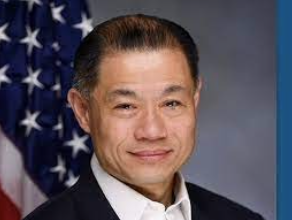
Do you mind if I ask you about your cultural background and the abundance and range of food in Queens? “My background is Flushing boy! And we have pretty much every food in Flushing…people say you can travel the world without ever leaving Queens. Not only can you get a taste of every culture, but you can get a little taste of every culture through its cuisine. I don’t know of any culture on this planet that doesn’t have a restaurant in Queens where you could sample some of their food. If you’re talking about food and how it intertwines with the immigrant fabric of Queens, you picked a great topic.”
What are your recollections of your family’s food traditions? “I would say I’m a Queens boy so I eat all different kinds of food. Perhaps on holidays you go back to some of the food that is primarily from the countries you have emigrated from. Clearly Chinese cuisine is more than abundant in Queens and even more specifically it’s not even just Chinese cuisine. We have a good share of Taiwanese restaurants…including some things that are not as commonplace – in the summertime, you can get shaved ice, which is common in Taiwan, which is hot all year round.”
How do you think powerful food traditions – brought either by first-generation immigrants or passed down over multiple generations of New Yorkers whose ancestors immigrated – contribute to community resilience and food stability? “I think there’s a little bit of natural selection to food. Food that tastes really good is going to be passed down through the traditions, through the generations, but also passed on to people of all different cultures. The fact that we have a lot of different kinds of food available in Queens naturally adds to the sustainability of food and just as importantly, nutrition itself.”
Does food connect people? Does it help keep immigrant families grounded in times of crisis? Does it connect them with their culture at home? Or perhaps it connects them with other New Yorkers by sharing their culture? “Food is a great unifier. Everybody likes to eat. Everybody needs to eat…When people try new foods, it breaks through all sorts of stereotypes and conceptions they might have. It also reminds you of things that you might have grown up with – food is a source of cultural continuity.”
So then COVID hit and there was a great need for food distribution across New York, especially in some Queens neighborhoods. What demand did you see in your district? “Food insecurity became an even more exacerbated problem. There are substantial pockets of people who didn’t have adequate access to high-quality food. You see food lines stretched around the block in so many neighborhoods where nobody would have imagined that there could be this kind of food insecurity…COVID really laid bare many of the inequities and insecurities of food and having access to nutrition.”
Using food as a tool in times of crisis, what changes can be made going forward to build resiliency and sustainability? “For our food supply, we’ve got legislation that enhances farmers upstate and on Long Island to grow food. We definitely want to have more locally sourced food. It’s of higher quality…and farming is actually a very important part of New York’s economy. So locally sourced foods help farmers continue to grow their food. We want to make sure that transportation networks are in place so that the food can be transported down to New York City. Public schools have a preference for locally sourced food and our public school system is a huge customer when it comes to purchasing food. COVID necessitated a large network of distributing food locally through our schools. In such a wealthy place like New York, no one should go hungry. When we have a long-term view towards resiliency and sustainability, making sure that we have some self-reliance especially when it comes to locally grown food, our long-term outlook will be much stronger.”
How would you define food resiliency? “Resilience is about making sure that we do the bare minimum. Resilience ensures that we have a steady stream of high quality nutritious food for everybody. On top of that bare minimum definition would be food that not only is of high quality and in abundance for everybody, but also prepared and provided in a way that brings people together. It builds a stronger community and reminds us of our history and traditions. It’s not just the biological component of food, but food as a way of life.”
Parts of this interview have been condensed.
Reflections
Senator Liu spoke of the NYC public school system as a large food purchaser. Thinking about the nation’s largest school system as also one of the largest food customers was stunning. Indeed, the DOE is NYC’s largest institutional food purchaser and with more than 1 million students, it feeds more children daily than any other institution in the U.S. Even before the pandemic, the NYC school system was praised “as a national leader in providing information about meals in multiple languages and accommodating a variety of dietary needs with kosher, halal, and vegetarian food options.” But NYC public schools have also taken an out-sized role during the pandemic, feeding not just students but also vulnerable members of the community. With no questions asked, grab-and-go breakfast and lunch meals were available at schools across the city, but particularly concentrated in lower-income communities of color. A year into the pandemic, this effort is being lauded as a silver lining.
A little further research led me to the Good Food Purchasing Program (GFPP), a coalition effort to harness the power of municipal institutional food procurement to achieve social, environmental, and economic goals through the promotion of better food purchasing practices.
https://www.cunyurbanfoodpolicy.org/news/2019/5/23/bringing-the-good-food-purchasing-program-to-nyc
The GFPP is the first food procurement model to equally prioritize five values: local economies, environmental sustainability, valued workforce, animal welfare, and nutrition. The coalition is currently working to create a baseline assessment for NYC DOE.